
The Depth of Limits: Why I Built a Sauna in Panglao
From descending into blue water to discovering the ultimate recovery tool, here's how freediving led to We Sell Rest.
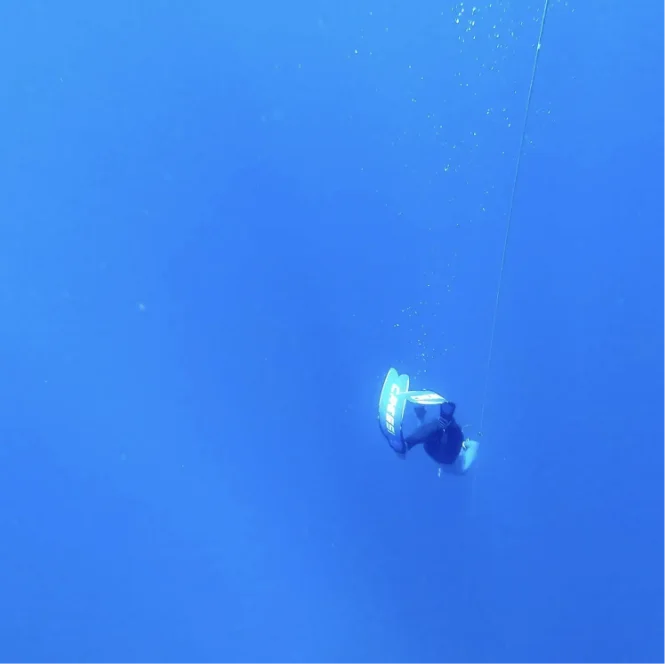
The Ocean as a Mirror: Moving Past the Illusion of Limits
When I first learned how to freedive, my goal was simple. I viewed the sport as a specialized way to observe the underwater environment—the marine life, the corals, and the seafloor. At the time, I believed that once I reached the bottom, I had reached the limit of the experience.
However, as I began to dive deeper into "blue water"—areas where the seafloor vanishes and visible landmarks disappear—my perspective on boundaries began to shift.
The Illusion of Physical Constraints
In the beginning, it is easy to assume that the body is the ultimate bottleneck. I thought my lung capacity, my ears, or the specific length of the rope I set as a goal were the hard limits of what was possible. But through training and a deeper understanding of medical and biological knowledge, you realize these are variables that can be adjusted.
- The Body: Can be adapted through technique and physiological conditioning.
- The Gear: The rope can always be lengthened into the depths.
As you dive deeper again and again, your focus shifts from the external world to the internal one. Under intense pressure and without breathable air, your thoughts, fears, frustrations, and motivations become almost tangible. You realize that the body isn’t usually the obstacle—the limit is the part of your mind asking where the limit is.
Action Over Speculation
Reaching a new depth isn't about luck; it's about shifting from setting a "goal" to managing a "system." You overcome limits by taking calculated action:
- Planning and resource management.
- Mental training and psychological discipline.
- Technical consistency and physical conditioning.
Now, as I go deeper into the ocean, I find that I am ultimately just going deeper into myself.
The Secret Weapon: Recovery and Sleep
One of the most effective tools I've found for enhancing this mind-body adaptation is deliberate heat exposure. Sauna sessions have been a cornerstone of my dive preparation. While the biological benefits—like cardiovascular efficiency—are profound, the simplest and most vital benefit I gained was perfect sleep.
In freediving, your nervous system is your most important piece of equipment. If you are restless or poorly recovered, your "dive reflex" won't trigger efficiently. A sauna session the day before a deep dive acts as a total "reset," lowering core body temperature and ensuring the kind of restorative sleep that makes a high-pressure dive feel like a calm, controlled experience.
A New Chapter at "We Sell Rest"
This realization is what drove me to build a professional-grade sauna facility here in Panglao. I wanted to create a space where the local community could access the same recovery benefits that helped my performance.
Ironically, while the facility is now ready, I am currently sidelined. Due to an injury, I am looking at approximately eight months of recovery before I can return to freediving. In the meantime, I'll be focusing my energy on the science of recovery and building the We Sell Rest community.
If you're looking to improve your own recovery—whether for diving or for life—I'll see you in the heat.